The Power of Choice

“We are disturbed not by things, but by the views which we take of things.” ~ Epictetus

An old Cherokee chief is teaching his grandchild about life. “A fight is going on inside me,” he said to the child. “It is a fight between two wolves. One is evil—it is anger, envy, sorrow, regret, greed, arrogance, self-pity, guilt, resentment, inferiority, lies, false pride, superiority, and ego.”

He continued, “The other is good—it is joy, peace, hope, serenity, humility, kindness, benevolence, empathy, generosity, truth, compassion, and loving awareness. The same fight is going on inside you—and inside every other person in the world.”

The grandchild thought about it for a minute and then asked the grandfather, “Which wolf will win?”

To which the old man simply replied, “The one you feed.”

The Cherokee parable and Epictetus’ teaching serve as a reminder that our inner world is shaped by choice, not chance. The two wolves represent real emotions, impulses, and habits that show up in our lives. We don’t choose whether these feelings exist; we only choose which ones we nurture.

Our reactions are often more influential than the events themselves. And this is essential, because what bothers us isn’t simply what happens, but the meaning we give those moments. And more often than not, that meaning is important because of the nature of our work or our lives, as well as our lived experiences and shared expectations. Often, this stirs up the wolf of anger, frustration, and resentment. But instead of feeding into those feelings, it’s much more helpful to see the difficult moments as opportunities to grow and to nourish the wolf of resilience, empathy, and compassion.

Remember that character is built choice by choice. Feeding the “good wolf” isn’t about being perfect—it’s about returning to the values we want to embody again and again. It’s about noticing when negativity pulls at us and gently choosing a different response. And over time, those small decisions shape who we become.

Ultimately, the power of choice comes down to this: we can’t always control our circumstances, but we can always decide which inner voice we allow to guide us. And sometimes it’s probably easier and feels better to let the evil voice reign and triumph. I always picture the angel and the devil on the shoulders – listening to the better angel of our nature is the way to go!

Consciousness and the Nature of Reality

“No problem can be solved from the same level of consciousness that created it.” – Albert Einstein.

I’ve been thinking and wanting to write about Consciousness for some time now – what is it, where does it come from, and how does it shape our reality, if at all? Few questions are as mysterious or fascinating. Scientists, philosophers, psychologists, and spiritual traditions all describe it in different ways. Are our thoughts, feelings, emotions, awareness, and sense of self created entirely within our brains? Or is the brain more like a receiver that “tunes into” a consciousness that exists outside the body? One aspect of this puzzle that most agree on is that objective reality exists independent of our subjective experiences, which are dependent on our minds.

So, what is consciousness? Researchers describe it in several layers. There’s phenomenal consciousness, which is our raw subjective experience through the five senses – what it feels like to see color or taste food. There’s access consciousness, which refers to the parts of experience that we can reflect on, describe, and use in decision-making by focusing on cognitive utility. There’s self-awareness, which is the sense of being “me.” Last but not least, there are the unconscious and subconscious layers – deeper layers of the human mind beneath conscious awareness – such as memories, urges, muscle memory, and automatic responses that constantly influence behavior. These varied definitions highlight the complexity of consciousness that is deeply tied to the brain, yet not fully explained by biological processes alone.

The strongest evidence for biological processes is that physical damage to the brain and chemical substances can alter consciousness. For instance, prefrontal cortex injuries can alter personality and decision-making. LSD and other drugs can induce psychological effects that alter perception, mood, and thought. There are also instances where, after someone suffers a brain injury, they can do amazing things that they couldn’t before – music, math, languages. In a way, they were able to access other dimensions of consciousness because of the result of physical injury, which precisely changes experience. Moreover, modern tools like the EEG and fMRI observe neural activity patterns that correspond to thoughts, perceptions, and emotions. In some cases, intentions can even sometimes be predicted milliseconds before a person becomes aware of them. Finally, we have all heard stories of near-death and out-of-body experiences in which the person sees a tunnel, bright light, euphoria, and a sense of separation, which could be explained by hypoxia, surges of brain activity, and REM intrusion, like sleep paralysis. However, science still cannot fully account for experiences in which someone who’s supposedly under anesthesia and not actively conscious could describe in accurate detail what happened while they were under. This leads to the possibility of the non-local model that views consciousness as fundamental, with different dimensions that our minds could theoretically access and perhaps tap into, like a collective consciousness.

In Dan Brown’s new novel, “The Secret of Secrets,” he introduces the field of Noetic science, which posits that our brain is like a receiver that can tune to different dimensions of consciousness, similar to how our eyes can only see, process, and interpret a limited part of the electromagnetic spectrum. This theory could account for the geniuses of human beings like Newton and Einstein – they were somehow able to access and see those other dimensions that are fundamental and universal. Another notable perspective is that throughout history, meditation traditions such as those from Buddhism, Taoism, Hinduism, and Vedanta, among others, describe consciousness as almost a pure capacity of awareness – independent of thoughts, emotions, and sensory input. People who practice yoga, prayer, and spiritual traditions will tell you that they are able to attain a higher level of clarity in consciousness and can create a sense of connection to others, the universe, or even a divine deity. Whether or not God exists, people’s spiritual experience contributes to a richer sense of conscious awareness.

So, where does this leave us? While some models see consciousness as created by our brain, others see it as something our brain filters. What we can agree on is that consciousness is still a central mystery and probably more complex than any model can explain, but it is something to explore through both scientific and introspective methods.

“The key to growth is the introduction of higher dimensions of consciousness into our awareness.” – Lao Tzu.

Finding Peace in the Present Moment

In a world that constantly urges us to chase, hustle, and fix ourselves, we often forget one of life’s simplest truths: peace isn’t something we find—it’s something we allow.

There’s a quiet beauty in realizing that nothing more needs to happen for you to feel whole. Not tomorrow, not next year. It doesn’t require a perfect life, a solved problem, or a shiny future. Peace can meet you right here, in the stillness between breaths and in the quiet acceptance of this very moment. Right now, there is peace available—if you allow yourself to feel it.

The Power of Acceptance
Peace begins the moment we stop resisting what is. That doesn’t mean we give up on our dreams or settle for less than we deserve. It simply means we stop fighting the current of life and learn to flow with it.

Acceptance doesn’t mean passive resignation. It means honoring where you are, how you feel, and who you are in this moment, without judgment. From that place of clarity, we can move forward with more kindness, purpose, and ease.

Letting Go of the Illusion of Control
So much of our inner turmoil stems from trying to control things that are beyond our grasp—other people’s actions, the future, the past. But peace arrives the moment we release that tight grip and trust that, even when things don’t go according to our plans, they unfold as they should.

Life is never perfect, but it is always sacred. The chaos, the stillness, the joy, the grief—all of it belongs. And all of it can teach us something about who we are and what we value.

Embracing the Ordinary
Sometimes we think peace will come once everything is in place—when we get the promotion, meet the right person, or heal every wound. But peace is often found in the ordinary: the quiet of the early morning, the warmth of sunlight on your skin, the sound of laughter, the gentle rhythm of your breath.

You don’t need to wait for a perfect moment. This moment is enough. You are enough.

A Gentle Invitation
So, if you’re feeling overwhelmed, uncertain, or lost, pause. Breathe. Place your hand on your heart and remind yourself: I am present. I am here. I am alive.
There is nothing to prove. Nothing to fix. Nothing to chase.
You don’t need to be healed. You don’t need to have all the answers.
You are allowed to feel at peace with your life, even if it’s not perfect. Especially then. Because peace isn’t found in perfection. It’s found in presence.

Peace Lives In Presence
You are allowed to rest.
You are allowed to soften.
You are allowed to be at peace, right now.

And in that peace, you’ll find not only calm… but clarity, strength, and a deeper connection to the wonder of simply being alive.

The Farmer and the Horse

Recently, I had to give a reflection before a regular meeting. As I prepared for it, I came across a parable that was not only connected to what I had been thinking about but also relevant to my work as a Resident Faculty. The parable is called “The Farmer and the Horse.”

There was a farmer in a small village with a single horse who helped him earn a living for his family. The other villagers constantly told the farmer how lucky he was to have such a great horse.

“Maybe,” he would reply.

One day, the horse ran away. The villagers came to the farmer to express their sympathies.

“Your horse ran away. How unfortunate!” the villagers exclaimed.

“Maybe,” the farmer replied.

A few days later, the horse returned home with ten strong wild horses in tow.

“What good fortune. What incredible luck!” the villagers crowed.

“Maybe,” the farmer again replied.

The following week, the farmer’s son was riding on one of the wild horses in the fields, when it kicked him off and broke his leg. The villagers arrived to express their dismay.

“What dismal luck,” they said.

“Maybe,” the farmer replied.

The next month, a military officer marched into the village, recruiting able-bodied young men for the war. The farmer’s son, with his broken leg, was left behind.

The villagers were joyful. “Your son has been spared, what beautiful luck!”

The farmer simply smiled, “Maybe.”

In my work with high school teenagers, one of the most important things that I’ve learned and have tried to do is to avoid judgment. It is human nature to judge because we compare what we see or observe to our lived experiences. That’s how we make sense of the world. In our conversations, it’s difficult but essential to separate the narrative from the facts. In the story, The villagers decide at every instance whether what happened was good or bad. The farmer, however, accepts the reality as it is and allows the space for the events to unfold, to exist, to just be. As Steve Jobs said in his Stanford commencement address, “You can’t connect the dots looking forward; you can only connect them looking backwards.”

When a student makes a mistake or comes to us with a problem, sometimes it’s easy to think, “Oh, that’s dumb” or “Come on, there are simple solutions” or “Why didn’t you think about the consequences?” These judgments come to mind because as adults, we “know better.” But more often than not, we probably made the same mistake and had the same problem and there was probably an adult that thought the same about us when we were younger.

So, instead of making judgments about whatever situation students encounter or bring up, be empathetic and understanding, recognize their thoughts and feelings, acknowledge their emotions, and help them to the best of your ability. This applies to everyday life as well and is part of practicing mindfulness for ourselves because sometimes, we are our own harshest critics.

It’s a small world after all

The Cantonese version of the song, “It’s a small world after all” is one of my favorite childhood songs. And I will explain later why I chose it as this post’s title.

To catch up a bit, it’s been over 4 years since I’ve written something on here (or anywhere, really). At one point, I didn’t even remember that I had a blog because I hadn’t journaled in quite a long time. So much has changed since Covid and I had no idea that I would end up where I am now.

To give a little update, I was working at Buxton School, a 9-12 boarding high school in Massachusetts until June 2022. I decided to leave because I was only able to see my family and friends once during Covid and I missed them a great deal. If the school were closer to home in the Bay Area, I definitely would have continued working there for who knows how long. I miss the place and my students and my colleagues and still keep them in my thoughts every day. After I left, I went home and spent time with my family for a little while. At that time, my sister and my brother-in-law who moved to Washington State had trouble finding day-care centers for my nephew because there simply weren’t enough spaces. As I was still contemplating what I wanted to do next, I told my sister that I could help take care of him until they were able to find something that worked for them. It would also let me spend time with my nephew; a win-win.

After doing that for close to 6 months, I eventually returned home and started looking for jobs once my sister and brother-in-law were able to go on maternity and paternity leave because of my second nephew. I still wanted to be a teacher and work in education but I wasn’t sure if I wanted to return to the classroom. In May 2023, I found a part-time YMCA swim instructor/lifeguard position and was hired after completing the swim test and lifeguard certification. I’ve always loved swimming (having been on my high-school swim team) and being around water in general so it was a sort of perfect fit – I get to teach what I enjoy doing. However, because it was only a part-time job, it didn’t provide any benefits and it simply wasn’t enough, financially speaking.

After thinking it over a bit more, I realized that I really do miss working in a boarding school setting. So, I started looking into different boarding schools in the Bay Area and found San Domenico School in San Anselmo. Though I grew up in the Bay, I had no idea that there was a K-12 school with a boarding program in Marin. Long story short, I was hired as a Resident Faculty in July of 2023 and I just started my second year here. Right now, I still get to teach swim lessons at the Y part-time and work in boarding, continuing my work as before except with fewer responsibilities.

Circling back to the reason behind the title of this post and why I decided to write again. At the start of this school year, when we welcomed new students and their families onto campus and into the dorms, I saw a familiar face that made me do a triple-take – it was one of my students who graduated from Buxton School in 2019. She saw me and was so surprised because she had no idea that I had left. It turns out that she is going to graduate school in Berkeley and her sister, who is a 9th grader, is one of the new students here at San Domenico. The family wanted her to be somewhere close to Berkeley and SD just happened to fit that bill. I was flabbergasted because I wasn’t really able to comprehend the chances of that happening. And hence the title of this post: It’s a small world after all.

Because of that, I also started thinking about writing regularly again. Looking at the archives, I still can’t believe that I started this blog as something fun to do and that it was never deleted because of inactivity (thanks, WP). This is still a place for my thoughts, nothing more.

I am not my emotion

I recently started watching many TED Talks again and came across this one that’s extremely relevant to what I do – not only teach but also help students with their emotional and mental well-being. I have given similar advice on many issues that the adolescents I talk to have dealt with or are dealing with, especially about recognition, acceptance, and acknowledgment. We are sometimes so caught up in our emotions and feelings, which may be completely valid, that we do not have the clarity to make smart decisions – and that’s one of the hindrances that Master Shi Heng Yi talks about. Worth 18 minutes.

All-School Trip – Washington DC

Here at Buxton School, we go on an all-school trip every year to a different city in the US to learn about various topics that are relevant to that city. And every four years, we go to an international destination. Also known as the Annual Urban Intensive, students and faculty split into groups to study issues such as homelessness, crime and punishment, media, education, and many more.

The week before we leave, students and faculty have trip group meetings to set up interviews and meetings with various groups and organizations in DC. Students call and schedule with these people and they also plan most of the trip. The faculty helps in whatever way we can to facilitate that process but overall, the trip is student-driven. They decide on what and when to eat, and what to do on cultural night out, and they help book buses and hotel rooms.

IMG_0282
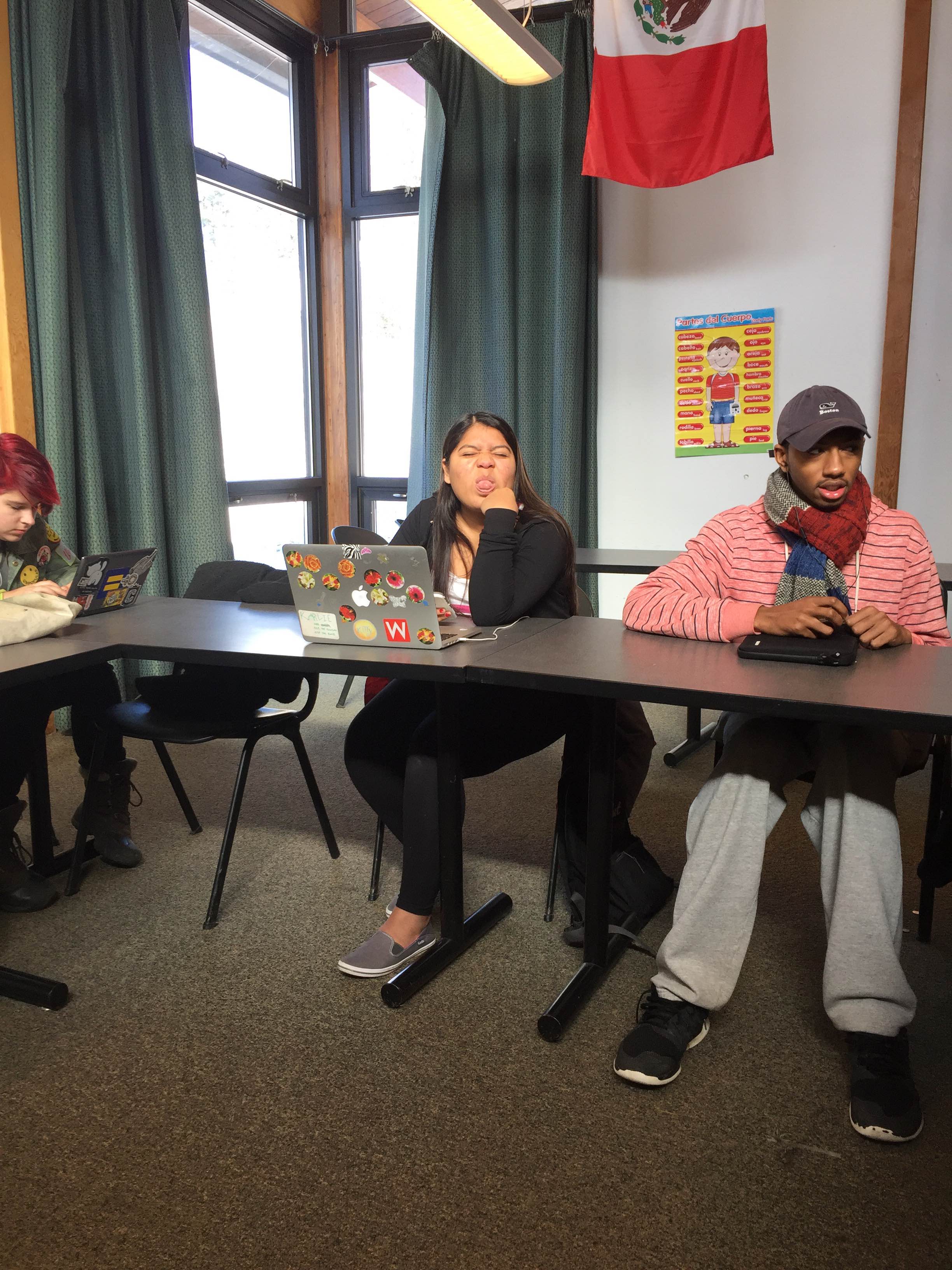
Taking a break from calling and setting up meetings.

This year, we went to Washington DC. Because it was an election year and we were in the capital, some of the groups focused on topics like women’s rights, democracy, climate change, gun control, Israel/Palestine, ISIS/Iraq/Syria, and immigration and refugee issues.

12829280_10101731658699076_29433962672063413_o
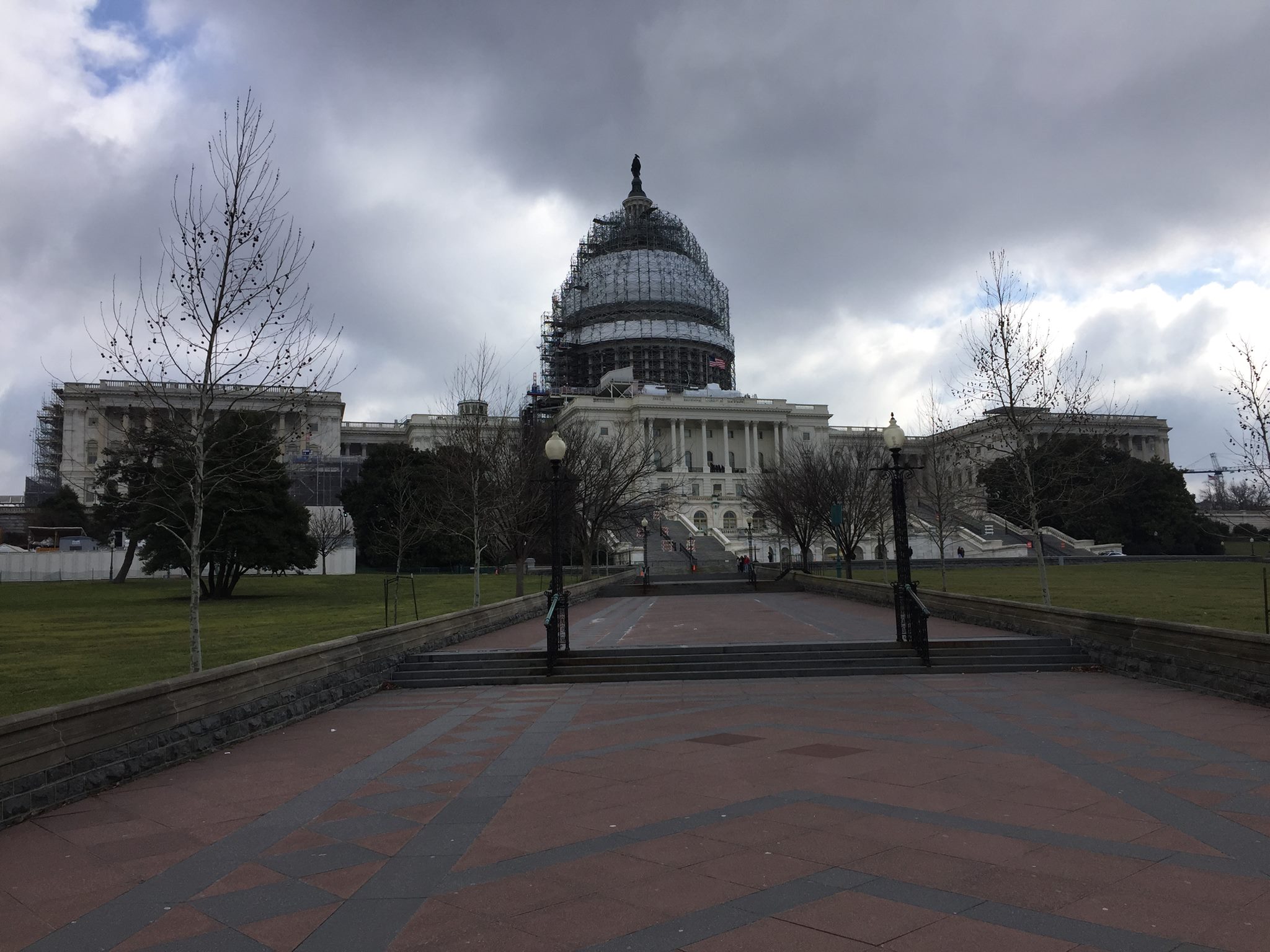
Capitol Hill.

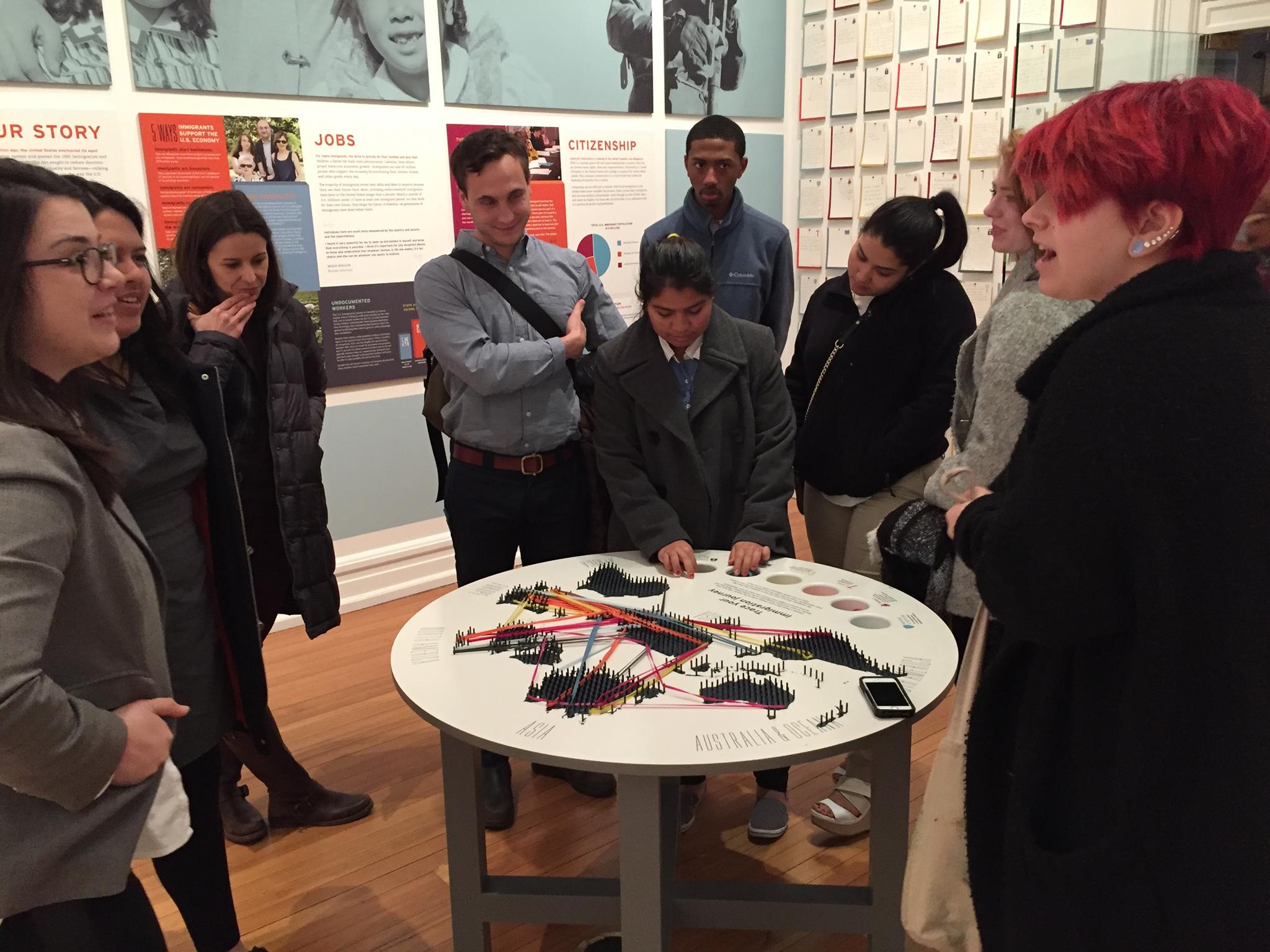
My group was on immigration and refugee issues and we had the opportunity to meet with many great organizations that are doing research, advocacy work, and just general awareness-raising on the problems with our current immigration system.

12841213_10101731657102276_8605732901522338725_o
Tour at President Lincoln’s Cottage with the American Immigration Council.

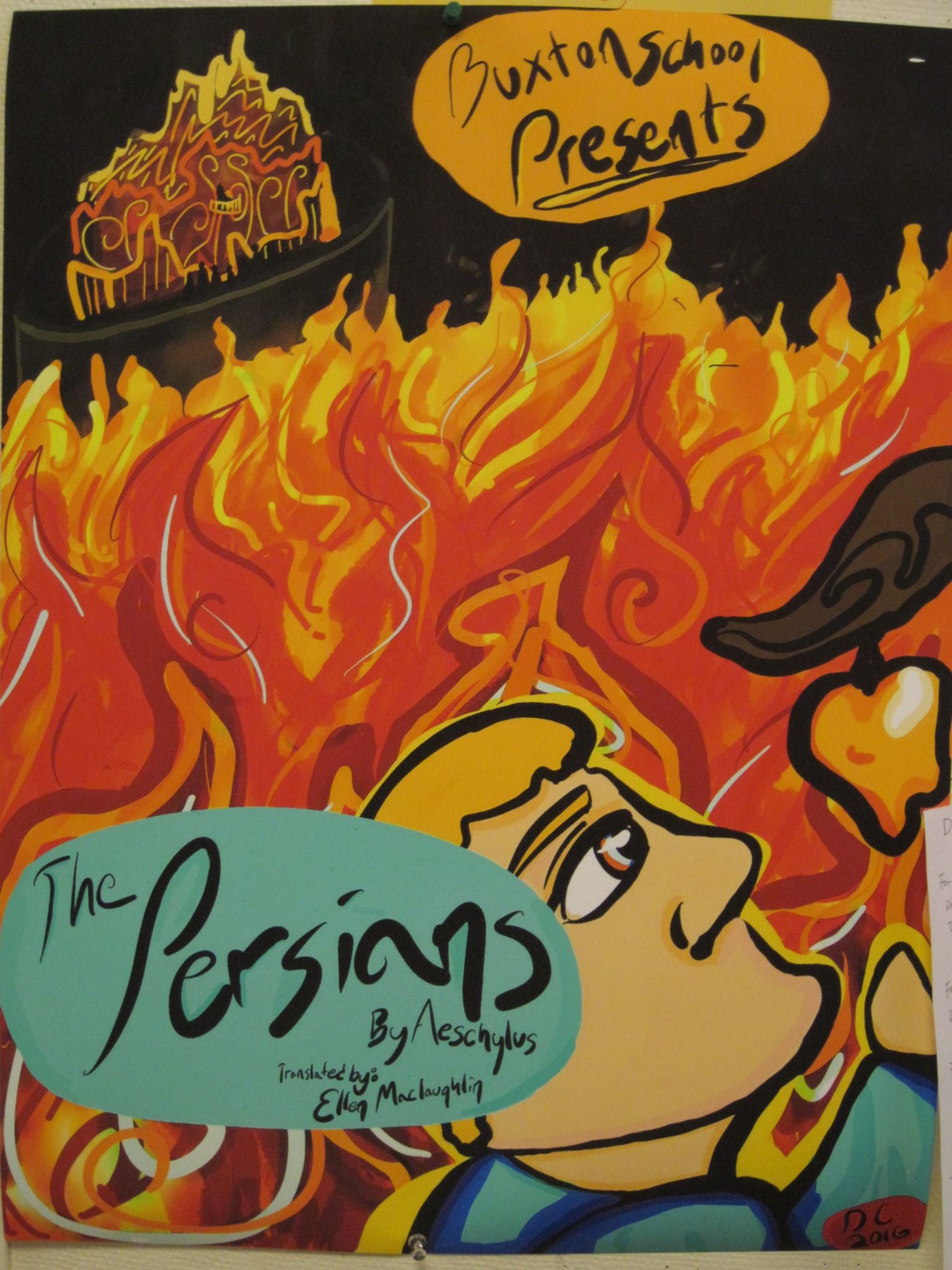
While we are in the city, we also bring an all-school play along to perform at various venues as a way to give back to the city. Every student is involved in the play in some way, whether they are acting, doing lights, make-up, drumming, dancing, or singing. This year, our school performed The Persian, which is one of the oldest surviving plays in Western literature.

12697178_10153511803990369_2798799289253595898_o
The Persian, one of the oldest surviving plays in Western literature.

This week, the trip groups will be meeting again to prepare a presentation to share with the school what we all learned. Every student also contributes to the trip book, which is a reflection of the different experiences that students had in the city, in this case, DC.

This was definitely one of my favorite trips!

The ALS Ice Bucket Challenge

If you have been online over the past few weeks, chances are, you know about the ALS Ice Bucket Challenge. ALS, short for Amyotrophic Lateral Sclerosis, also known as Lou Gehrig’s Disease, is a neurodegenerative disease that affects nerve cells in the brain and the spinal cord. The person with the disease progressively loses function and control of the body and eventually dies. During this time, the person is fully aware of what is happening, and what a terrifying thought it is to not be able to do anything.

The ALS Ice Bucket Challenge has brought attention to the disease and donations have skyrocketed since the conception of the challenge. Many with the disease have spoken out while well-known celebrities and athletes have done the challenge and donated to the cause.

Although the effort to raise awareness about ALS is admirable, encouraging, positive, and supportive, many have pointed out the negative sides to the challenge. One prominent argument against the Ice Bucket Challenge is that hundreds of gallons of water have been “wasted,” meanwhile, droughts are happening all over the world, with many people living, and have been living, without access to clean water. This view has its merits and maybe better ways to bring focus to ALS are out there, but the fact is that we waste water every day and we may not even know it. In 2010, The National Geographic Magazine covered the topic of water conservation and pollution, which is more relevant now than ever. So, instead of dragging down and bringing negative emotions to the original intent of the challenge, we should find other positive ways to make a difference in saving water and be well-informed about the issue because water conservation encompasses much more than not dumping a bucket of ice water over the head.

Another argument is that many people who did the challenge only did so because they wanted the “attention” or they did it “just for fun.” No disagreement here. But again, let us see this as a positive effect on the cause. Yes, these people may be attention-hungry and function on applauses and nods, but they are also contributing to the cause, however accidentally it may seem. So, let them have the “fun” and “attention” that they need or want, and let’s see it as a win for everybody.

Because, darn it, this world needs more wins. #ALSIceBucketChallenge

Oh, internet.

How wonderful you are. I came across this list on StumbleUpon and I could not help but admit that I have seen 85% of what’s on there. The amount of information on the internet is increasing exponentially and no matter how much I try to avoid looking at “useless” and “lame” videos or articles, I still hear about them from students, friends, and social networks. I am glad that I still do not have a smartphone but I do realize its convenience, especially with apps like the GPS. I also found an interesting article that shows you how to completely remove yourself from the internet. One day, just maybe, I will do it.